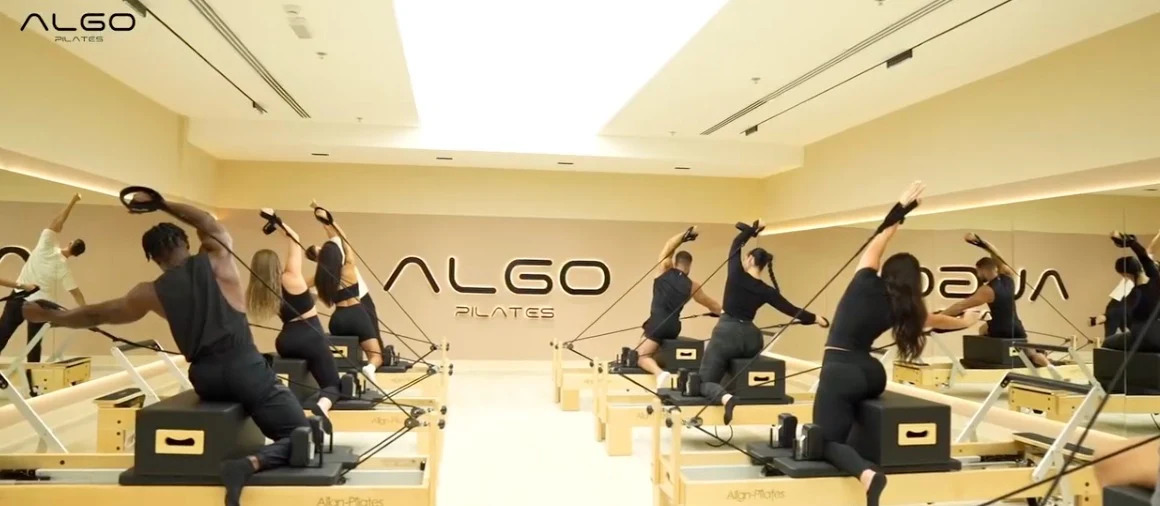
One of the most common questions I receive when teaching at ALGO Pilates, whether in Dubai Investment Park (DIP) or Motor City, is:
"Anesti, how many times per week should I do Pilates?"
And honestly, it is a very good question. After all, when you invest your time, energy and money in Pilates, you naturally want to understand how often you should practise to get the most out of it.
But is there really one correct answer for everyone?
Not necessarily.
Before answering this question, I always try to understand the person standing in front of me. What are their fitness goals? What does their daily routine look like? What are their responsibilities and commitments?
We all have different lifestyles. Some of us have families and children, while others manage demanding careers, run businesses or simply try to find a little personal time in an already busy schedule.
And that is something we should always respect.
Based on my experience as a Pilates teacher, working with different people across cities around the world, I believe the right Pilates frequency depends on two important things: your lifestyle and what you want to achieve through your practice.
Let's explore what different weekly Pilates routines can look like.
Is Twice-Weekly Pilates a Good Starting Point?
For many people, practicing Pilates twice a week can be an excellent starting point.
This can be particularly helpful for someone returning to exercise after a long break or someone who wants to introduce more movement into an already busy lifestyle.
It also allows you to build familiarity with the exercises while giving yourself time between sessions to recover and adapt.
Twice-weekly Pilates can also work very well if you already participate in other physical activities during the week.
Remember, Pilates does not necessarily need to be the only form of exercise you practise.
You can combine your Pilates classes with walking, cycling, swimming or other activities depending on your interests and fitness goals.
The important thing is to create a routine that is realistic, enjoyable and sustainable.
What If Pilates Is Your Main Form of Exercise?
This is where my recommendation changes.
If Pilates is your primary form of physical activity, I would personally encourage you to consider working towards four sessions per week, provided your body is adapting well and your sessions are appropriately structured.
Why?
Because practising more frequently gives you additional opportunities to:
- Improve your movement technique and control.
- Develop strength and coordination.
- Become more familiar with different Pilates exercises.
- Explore different movement patterns.
- Progress gradually towards your personal fitness goals.
Of course, this is a personal recommendation based on my teaching experience, not a universal rule.
The intensity, variety and structure of your sessions matter just as much as the number of times you attend.
Why Variety and Recovery Matter in Your Pilates Routine
Practising Pilates frequently does not automatically mean practising Pilates intelligently.
Our bodies benefit from different training stimuli. We need opportunities to challenge our strength, improve mobility, develop coordination, practise control and, equally importantly, recover.
Repeating the same demanding workout every day is not necessarily the most effective way to approach your training.
At ALGO Pilates, we believe in creating a more balanced and varied training experience.
Your weekly practice can include different class formats, each offering its own focus and movement experience.
Traditional Pilates Classes: Focus on Movement Principles
Traditional Pilates sessions allow you to focus on the foundations of the practice, including technique, alignment, breathing, stability and movement control.
These principles help you develop a better understanding of how your body moves.
Reformer Gym Vibes: Explore Strength-Based Training
Our Reformer Gym Vibes classes introduce resistance-based exercises and strength-training principles.
They offer an opportunity to explore different movement patterns while challenging your body in a structured environment.
Athletic Reformer: Add a Dynamic Challenge
If you enjoy a more dynamic approach to movement, our Athletic Reformer classes offer a different experience.
These sessions incorporate dynamic movements and coordination, with opportunities to elevate your heart rate while working on overall physical performance.
Tower Classes: Discover Different Movement Possibilities
Our Tower classes introduce different movement possibilities through the use of the Pilates Tower equipment.
They provide opportunities to explore mobility, stretching positions, resistance and movement control.
Different classes, different purposes, but all contributing to a more varied weekly training experience.
So, How Many Times a Week Should You Do Pilates?
Ultimately, there is no single answer that works for everyone.
At ALGO Pilates, our goal is not simply to encourage you to attend more classes. It is to help you understand what your body needs, how to balance your training and how to progress safely over time.
If you are looking for the best Pilates studio to support your fitness journey, look beyond the number of classes available. Consider the variety of sessions, instructor guidance and the overall approach to your practice.
Speak with your senior teacher, share your goals and commitments, and together create a weekly plan that works for you.
Because ultimately, the best Pilates routine is not necessarily the one with the most sessions.
It is the one you can maintain, enjoy and progressively benefit from.